Sunday, May 26, 2013

One More Tidbit

Another helpful rule of thumb from Cushing's Handbook:

Very broadly: If the proportions (by molecular weight) of silica to alumina in a glaze in the range of 8-10, the glaze will probably be glossy and transparent.  This (and the next bits) does not account for which flux is used; a high proportion of magnesium (for example) used as a flux will cause the glaze to be matte regardless. The proportions of silica to alumina can go as high as 18 to 1.

If the proportions are in the neighborhood of 5-8 to 1, this will probably be a satin or waxy glaze. Depending on the flux.

If the proportions of silica to alumina are 1-5 to 1, this will likely be a stony matte glaze.


Charlotte Smith
We have yet another chance today to learn to dance in the rain, here in Maine. (A friend observed that we must be slow learners!) The pots that I left unwrapped all day yesterday and then overnight, are still too wet to trim. My plan is to throw some ^6 test pieces, now that I have a boatload of recipes to test, and to generate a boatload more recipes with my new toy.


Saturday, May 25, 2013

My New Toy

Your authoress is one happy Potterchik today! I've been taking Glazemaster for a whirl, and boy, if any of these test glazes works out, I can't give them my $40 fast enough. It does exactly what I want glaze calculation software to do: allow me to enter the recipe in percentage by weight - the way most potters use recipes - and then it tells me what the molar percentages are, and the Unity formulas. THANK YOU!! It also re-calculates the percentages when you add new ingredients to bring the total back to 100; that's probably obvious, but just think, I'll never screw that up by hand again!

So, I can type in a ^10 recipe, move it to the right side of the page so it is available for comparison; then copy it to the left and start typing in changes intended to lower the maturation temperature. The software tells me as ai go along what the Unity proportions are, so I can make additional changes if the proportions of silica and alumina get out of whack. It also tells me its thermal expansion value - which I'm finding tends to go up when I add frits - so I can keep that within an acceptable level. This should create a finished glaze which has properties similar to that of the original.

I can also compare both the original ^10 glaze and its new ^6 little sister to the limit formulas I got from Cushing's Handbook, and determine if they fall within the acceptable range. I'll write another post with the original glazes and their ^6 derivants when I have some results to show you.

I will say, though, despite my frustration with the first software I tried - Insight - that their reference library and help resources are far superior to Glazemaster. I feel sort of guilty that whenever I run into a question that's not covered in Cushing, I go to the Digitalfire Reference Database.

**hey, just in case you were wondering...okay, you probably weren't wondering...LOI, used in glaze chemistry, stands for Loss on Ignition, which refers to the weight a material loses upon firing.

PS. - Insight apparently does this - the material-by-weight thing - as well; I've just had an email from its technical staff. I couldn't figure it out even with the intro video, but maybe you can. Lots of people do swear by the program. 

Okay, I Know What I Said But...

...this is really really helpful, and sometimes I absorb and remember things better when I type them up myself. So! I really am studying.

I created this table to help me remember the limit formulas - the range of ratios of flux, alumina and silica - for glossy, satin, or stony surfaces at ^6 and ^10. Remember these are ratios of molecule counts - we still haven't gotten to how they translate into percentages by weight, yet:

This is a simpler version of the table that Professor Cushing presents, which includes proportion ranges of specific fluxes, and of boron, an alternative low-temperature glassformer (if I am understanding that correctly.) Just this alone is (well, will be) tremendously helpful.
Once I get the translation part down, I'll only have to compare a glaze to this table to know if it has the appropriate proportions of silica and alumina to flux to work at my given cone level, and not be too soft or too viscous. There is great overlap in the percentages, because much depends on which specific fluxes are used, and because the categories are pretty broad: "Satin," for example, could describe a waxy shine or an eggshell matte.

Anyway, back to the book. Still a lot to learn! Hope this is helpful for someone out there in TV land. 

No Shortcuts

Thank heaven for Professor Cushing! It appears that despite my efforts to find ways around it - winging it, using software - I am going to have to learn to understand Unity Molecular Formulas. Very basically, I know what Unity Molecular Formulas are; they express the glaze formula as a count of molecules of glassformer, stabilizer (alumina), and flux, with the amount of flux weighted to one (that's why it's called Unity, get it?) and the silica and alumina amounts expressed relative to the flux. I just don't understand how to translate them to batch recipes that I can use. That's where the good professor comes in.

I few months ago, I bought a copy of his handbook. the link above goes to Amazon, the second to an address from which you can purchase from Cushing himself. It's probably worth getting an envelop & stamp, as I see the notebook is selling on Amazon for $190; whereas the professor offers it for $28. It's a great book utterly packed with knowledge and ideas; this particular chapter, though invaluable to me, happens to be on the boring side. I feel like an undergrad at Iowa State again: those soft chairs at the Parks Library were just way too comfortable. If I were sitting there now I'd fall asleep for sure.

And, clearly, I am utilizing another of my undergrad work-avoidance techniques: simple procrastination. Writing a blog post about RO Unity is miles better than reading about it!

Stop that, Lori. Stop it right now. If I post again before noon, EST, somebody remind me that I am supposed to be reading. 


Thursday, May 23, 2013

Thursday Inspiration: Laurie Pollpeter Eskenazi


Laurie's vases were my favorites, but she makes all kinds of awesome stuff. Check it out here.

Hat tip to Joanna Skolfield of Blarney Stone Pottery. 

Sunday, May 19, 2013

New Items in the Pottery Shop!

As long as they are this time of year, the days are not nearly long enough. I've been working pretty much steadily since I got up this morning around five, and it's nearly seven now, and I can see there are things on my list that are. not. going to happen. I did manage to finish some butter dishes, take some photos, and get to the gym - which accomplishment was promptly negated when I ate a hefty slice of my prop! Seemed a shame to waste it. :/

I also got my Kickstarter thank-you cards signed and ready to go out, spent a little time navigating around Glazemaster, and listed a few items on my website. Click the captions to see more photos or to purchase.

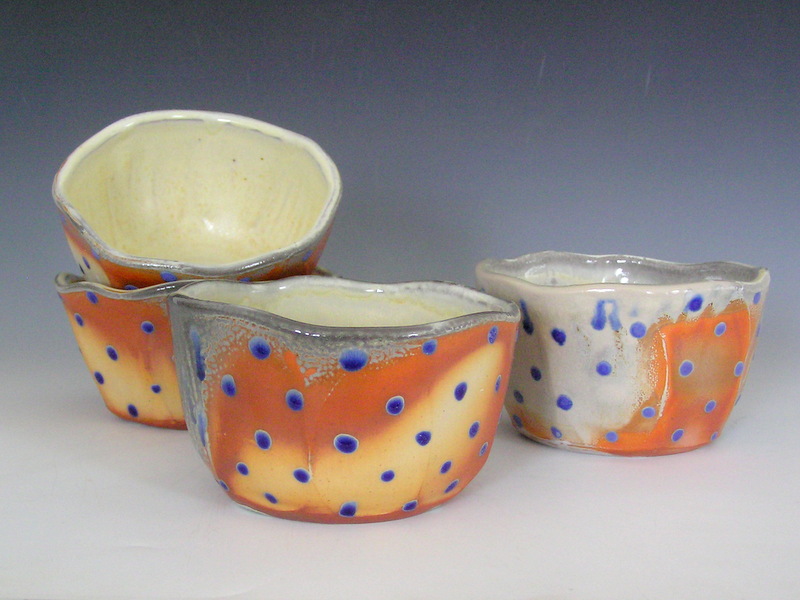
Set of Four Dessert Bowls, $120
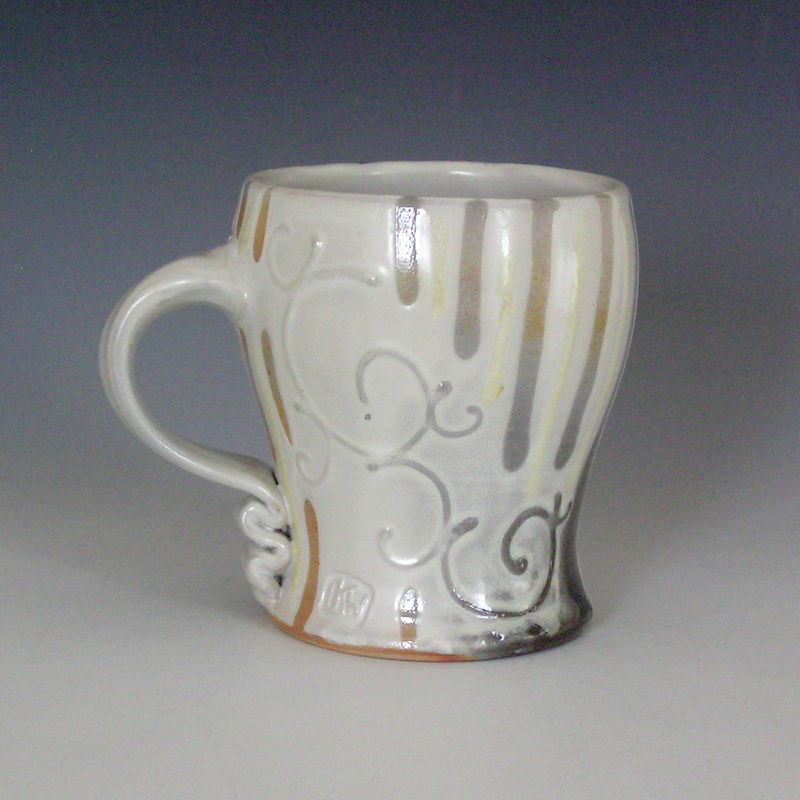
White and Silver Striped Mug, $36
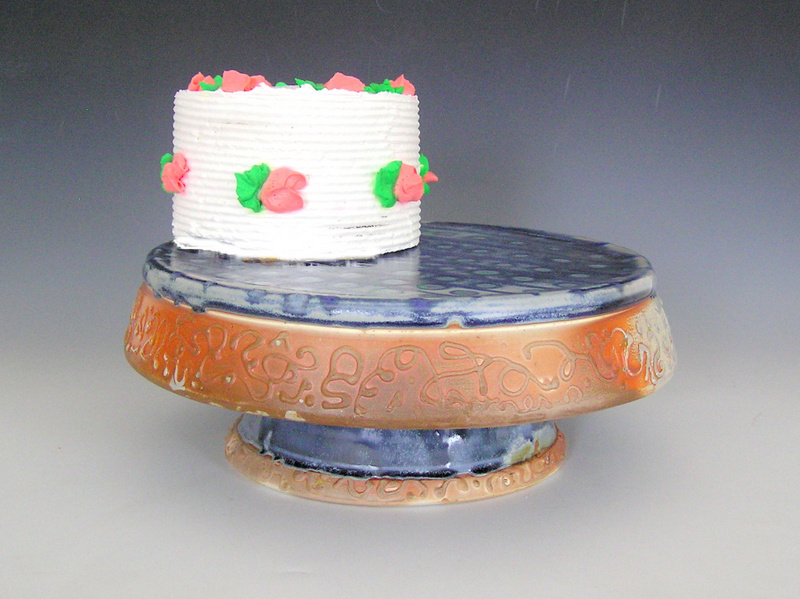
Blue and Russet Cake Stand, $125
I've still got berry bowls to trim, and promises to keep, and miles to go before I sleep.

Friday, May 17, 2013

Time to Prune?

You may remember my way-too-angsty decision back in November to raise my prices for the New Year? This has so far been a fine, fine thing, as I've met no real resistance - I'm still selling everything I can make (current work - I haves tons of old inventory), although I make somewhat less stuff. Though I was never aware of hurrying before, I do take more time with each piece now. The higher price point has sort of given me permission to do so, and it seems like, if someone is paying $95 (or more) for a serving bowl, it ought to be a damn fine serving bowl in every detail.

The change has been hard in one way, though: I am only now, as our season here in Maine gears up, realizing that I will have to say goodbye to some old consignment accounts, due to making fewer pots. These are folks I've done business with for awhile; they are friends, and I feel like a jerk saying, Sorry! Demand exceeds supply! On the other hand, consignment requires a ton of ware to be made and sitting on shelves out in the world, while I wait for checks to come in; and it requires a fair amount of maintenance in the form of record-keeping and the switching out of work. If I'm spread too thin, it makes sense for the outlets returning the smallest or rarest checks to get cut.

I'm already getting practiced at the art of saying no to new consignment outlets which contact me, but Good Business demands that I prune existing accounts, too, if they underperform. In my head I know it's better for the stores as well: surely they'd rather use their limted shelf space for work that would fly off, right?

Maybe I won't do it right away. It's May, in Maine; pulling work now gives them a scant couple f weeks before the tourist season begins in earnest on Memorial Day to replace me. That seems like a shitty thing to do. And who knows? Maybe this will be the year that one or more of them really takes off.

Thursday, May 16, 2013

Thursday Inspiration: Patrick Coughlin

See lots more of Patrick's intriguing work here.

Groundhog!

Tim Cichocki, a potter from Norridgwock, Maine, and my dear friend, is firing his groundhog kiln this spring!
This will be a three day firing, loading June 20th and firing through the 23rd. Stoking shifts are required, as is a $200 firing fee. Participants are allowed kiln space equivalent to a 4 x 4 pallet full of work. Wood & wadding provided; you bring the pots.Greenware - bone dry, interjects Captain Obvious! - is fine.

Space is limited! Give Tim a shout a tcwoodfire@gmail.com if you want in on this opportunity.

Wednesday, May 15, 2013

Slab Work

I did some some throwing today, starting with large serving bowls, then mugs; by the time I got to sugar and creamer sets my left wrist was feeling a little twinge. Luckily there's more than one way to make pots! These wonky little guys are slab built.

I like handbuilding as much as I like throwing, actually. It's slower and more contemplative, and can produce some engaging shapes. "Slower" is not always a plus, of course, but I am looking at the wrist-twinges as a blessing in disguise: they give me a reason to switch to my less-productive mode.

Monday, May 13, 2013

Mother's Day Wrap Up

It rained, pretty hard at times, both days of the sale; which sucked, but whaddaya gonna do? It's weather. Railing against it is the definition of futile. On the bright side, I didn't lose any money, and got to spend a day with my good friend Karen, who is an absolute trooper. We watched a DVD of Buffy the Vampire Slayer while waiting for the rain to quit. On the further bright side, it's my habit not to make any plans for the proceeds of event like this until the money is in my hand, so I'm not in a woeful place. I haven't brought the pots in yet and probably won't until Wednesday morning, so a few more sales may trickle in.

Next up: sending out Kickstarter thank-you cards, taking apart and cleaning my burners (YIKES), another ^6 test firing - this time at home, I think - and a ^10 maybe June 1? Also, a nap, scheduled for Wednesday afternoon.

I'm store-sitting Thursday & Friday, which should give me some time to post the Thursday Inspiration, which has been AWOL these last couple of weeks; and also to spend some time with Glazemaster, to see if it's maybe a little more user-friendly than Insight. I like it better, at first blush, because it gives you an option of output in percent by weight, as opposed to only RO Unity or Molar Weight. I don't mean to libel Insight - maybe there is an option for percent by weight in there somewhere, but I looked around the program for a good long time and did not find it. I did decide that it's more than worth it to understand both the RO Unity method and molar weight, but I need the program to be a sort of Rosetta Stone to get me there, until I've got my head around it.

And oh hey - if you're visiting coastal Maine this summer, drop in on Rick at On the Main! I just delivered him a boatload of pots. Also check out Ryan's Irish Pub, just up the road in Kennebunkport - my brother & his wife will be playing Irish tunes there on alternate Saturdays all summer.


Saturday, May 11, 2013

Big Day!


I kicked my own butt yesterday, weeding, mulching, and mowing to get the garden ready for visitors - and then it was time to start working - setting up the tables and ware for the start of the Maine Pottery Tour today. My good friend Karen Discenso will be joining me today. We'll carry the wheel outside - Karen has a canopy, so, whatever, weather! Do your worst! Wait, no, not your worst.

I still need to price everything, and Doug is putting out some pots, too (so I hope he wakes up soon.)

If you'd like to come visit me or the other studios taking part in the tour, you can download a PDF of the map here.