
The craft of pottery ties us to our history, in part because the material is so durable. Pieces of the objects themselves survive, giving us clues as to the lives of the people who made them.
Much of prehistoric pottery, if it contains images at all, features images of animals or humans, reflecting the interests of the culture that produced it. A recent article in Science Daily reveals that Halafian pottery, from the Mesopotamian region in the era from 6100 B.C. to 5100 B.C., produced the earliest known botanical images on ware. This is of particular interest to me, as botanical imagery is sort of a specialty of mine! In Halafian ceramics, flowers, seedlings, shrubs, and branches are depicted but interestingly no edible plants, suggesting the images were purely aesthetic, rather than conveying information about agriculture or food gathering. The floral images were arranged in precise geometric patterns, indicating the makers engaged in mathematical thinking long before any known numerals or mathematical writings. The images are spaced evenly across the surfaces, and some floral images have petals arranged in mathematical sequences: 4, 8, 16, 32.
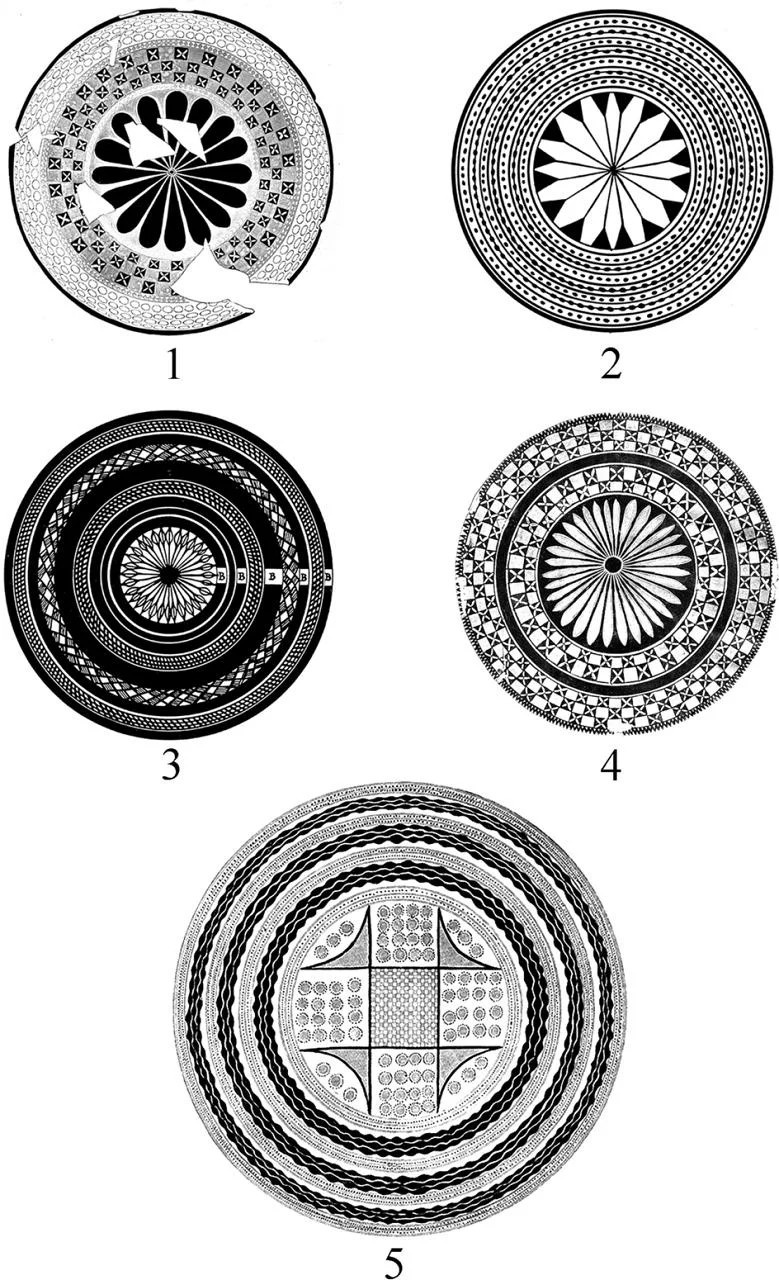
Math, science, history, unraveling the mystery! Or, if you prefer: prehistoric people! they were just like us.
No comments:
Post a Comment
Thanks for leaving a comment! I love to hear from you.